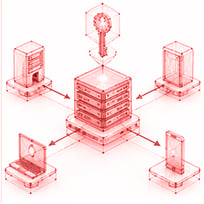
Key Lifecycle
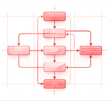
Futurex automates each stage of the key lifecycle inside an HSM-backed control model. Security teams can apply policy, coordinate application changes, and document lifecycle events from key creation through secure destruction.

Automate key generation, rotation, revocation, and destruction across enterprise, cloud, payment, and hybrid environments to improve control, consistency, and security at scale.
HSM-backed lifecycle control
Policy-driven automation across key operations
Zero-downtime rotation and rollback support
Standards-based integration with enterprise systems
Advanced Key Lifecycle Management provides security teams with centralized control over how cryptographic keys move through their full lifecycle.
Teams can use it to:
Key lifecycle work is often fragmented across vaults, HSMs, cloud services, certificate workflows, and application-specific tools, creating policy drift, inconsistent rotation timing, manual handoffs, and audit records scattered across separate systems.
Futurex consolidates lifecycle control into CryptoHub, a unified cryptographic platform built on HSM-backed architecture. It applies policy-driven workflows for key generation, distribution, rotation, revocation, archival, and destruction across enterprise applications, cloud environments, payment systems, and hybrid infrastructure.
While others force teams to reconcile lifecycle events across fragmented point tools, Futurex delivers a single lifecycle control plane with validated hardware-based key generation, zero-downtime rotation, rollback support, and unified audit documentation.
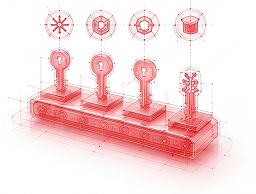
Futurex automates each stage of the key lifecycle inside an HSM-backed control model. Security teams can apply policy, coordinate application changes, and document lifecycle events from key creation through secure destruction.

Secure creation of symmetric and asymmetric keys within HSM-backed hardware using validated entropy and defined policy controls.
Controlled delivery of keys to authorized systems and applications through role-based permissions and certificate workflows.
Automated rotation policies are applied across applications without planned downtime, reducing risk exposure and maintaining compliance.
Immediate deactivation of compromised or outdated keys across connected systems and environments in real time.
Secure retention and destruction processes aligned with regulatory requirements and documented for audit review.
Organizations frequently encounter challenges such as:
These challenges intensify when lifecycle operations are distributed across vaults, HSMs, cloud services, certificate authorities, and application-specific tools. Futurex consolidates lifecycle workflows into a unified HSM-backed platform, allowing teams to apply policy, track key events, and eliminate manual coordination across complex environments.
For organizations transitioning from legacy tools, Futurex supports migrating existing keys and policies with minimal risk and operational disruption.
Crypto-agility extends beyond scheduled key rotation. Organizations need the ability to introduce new algorithms, update lifecycle policies, and stage cryptographic migrations across applications without rebuilding operational workflows or disrupting business operations.
Futurex delivers crypto-agile lifecycle management through centralized control, policy-driven automation, and native support for RSA, ECC, AES, 3DES, and NIST-standardized post-quantum algorithms. Security teams can use the same lifecycle framework to manage existing algorithms, implement hybrid cryptographic models during transition, and prepare for post-quantum migration.
As quantum computing threats accelerate and Harvest Now, Decrypt Later attacks target long-life data, crypto-agile lifecycle management becomes essential for:
Encryption keys must be protected with the same level of security as the data they safeguard throughout their entire lifecycle.
A hardware root of trust ensures that all key lifecycle operations—generation, distribution, rotation, revocation, archival, and destruction—occur within tamper-resistant hardware security modules (HSMs).
Hardware-backed lifecycle management provides:
This architecture ensures that encryption keys remain protected throughout their lifecycle, even if other elements of the infrastructure are compromised.
Key lifecycle platforms should provide comprehensive capabilities for managing cryptographic operations at enterprise scale.
Futurex Advanced Key Lifecycle Management includes:
Centralized application of lifecycle policies across generation, distribution, rotation, revocation, archival, and destruction from a unified control layer.
Multi-level authorization routing for sensitive key operations, tied to defined policies and operational roles.
Comprehensive documentation and reporting for lifecycle events, built for compliance review and operational analysis.
Coordinated application updates and key rotation without planned downtime, maintaining business continuity during lifecycle events.
Automated recovery from failed rotations or compatibility issues through rollback controls and synchronized recovery processes.
Native integration with enterprise systems through KMIP, RESTful APIs, SOAP, PKCS #11, certificate workflows, and application frameworks.
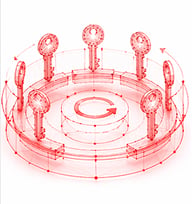
Secure key migration and backup workflows with cryptographic wrapping and hardware-based protection during transfer operations.
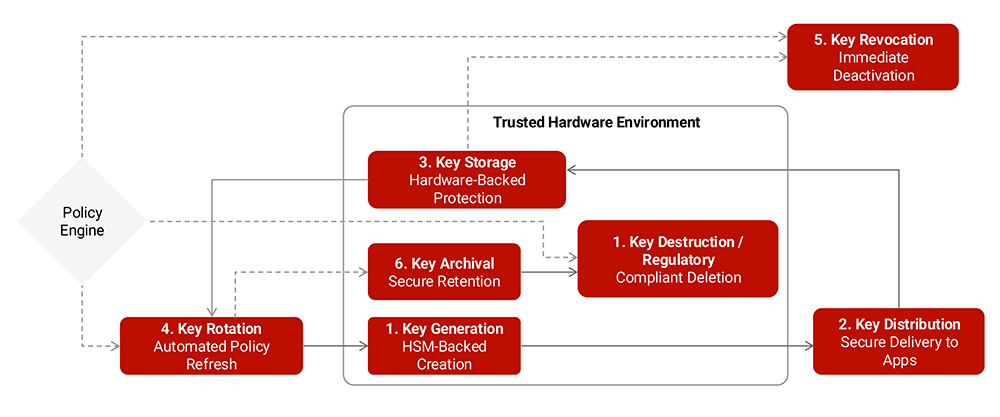
Advanced Key Lifecycle Management integrates into enterprise cryptographic infrastructure as a centralized control layer for key operations across the full lifecycle.
A typical architecture includes:
This architecture provides teams with centralized lifecycle control across hybrid and multi-cloud environments without fragmenting operations across separate point tools.
Advanced Key Lifecycle Management integrates with the systems and platforms that generate, consume, and validate cryptographic keys.
Advanced key lifecycle management is often fragmented across separate vaults, HSMs, certificate authorities, and manual processes, creating inconsistent control and limited visibility into cryptographic operations.
Futurex CryptoHub centralizes key lifecycle operations in a unified, HSM-backed platform, enabling organizations to generate, distribute, rotate, revoke, archive, and destroy keys within secure cryptographic boundaries. It supports policy-driven automation, approval workflows, isolated key domains, and wizard-driven provisioning across hybrid and multi-cloud environments, with standards-based integration through PKCS #11, KMIP, RESTful APIs, and Java frameworks.
While others depend on disconnected tools and manual coordination to manage lifecycle events, Futurex CryptoHub delivers centralized lifecycle control with automated workflows, lower integration complexity, and unified audit visibility across the full key lifecycle.
.png?width=750&height=580&name=Sunray_Orange%20(1).png)
Advanced Key Lifecycle Management helps teams maintain auditability, traceability, and control over cryptographic operations and lifecycle records.
Futurex supports:
For regulated environments, that means clearer documentation of what happened, when it happened, and which systems were affected. Built for governance, audit readiness, and operational accountability across the full key lifecycle.
Advanced key lifecycle management is the centralized administration of cryptographic keys throughout their full lifecycle, from secure generation through final destruction. It provides security teams with automated workflows, policy enforcement, and audit visibility for key operations across enterprise applications, cloud environments, and hybrid infrastructure.
Futurex applies policy-driven automation through CryptoHub, routing key operations through approval workflows, enforcing lifecycle policies, and documenting all events for audit review. All key operations occur within HSM-backed hardware, ensuring cryptographic material remains protected throughout automated workflows.
Futurex supports industry-standard protocols including KMIP, REST APIs, SOAP, and PKCS #11 for integration. Algorithm support includes RSA, ECC, AES, 3DES, and NIST-standardized post-quantum algorithms (ML-DSA and ML-KEM), enabling crypto-agile lifecycle management.
Futurex provides comprehensive audit documentation for all lifecycle events, automated reporting for compliance review, documented revocation activity tied to incident response, and retention/destruction records aligned with regulatory requirements. This supports PCI DSS, GDPR, HIPAA, and other mandates requiring cryptographic accountability.
Advanced Key Lifecycle Management automates the full key lifecycle – generation, rotation, revocation, archival, and destruction – across all environments. Cloud key management typically addresses key storage and usage within a specific cloud provider. This solution provides lifecycle control regardless of deployment location, including on-premises, cloud, and hybrid infrastructure.
“To ensure the highest levels of security while working with multiple clients, we have a segregated cryptographic key architecture. Thanks to Futurex's solutions, we generate, transport, and use these keys intuitively, allowing us to offer a comprehensive issuance product with key functionalities such as wallet migration.”
-Franco Pinto, Staff Software Engineer
Pomelo
Manual lifecycle management creates policy drift, audit gaps, and operational risk. Futurex Advanced Key Lifecycle Management provides the automation, visibility, and control required to manage encryption keys consistently across complex enterprise environments.