
Skip to content
Futurex Tops ABI Competitive Report as #1 Innovator!
  • There are no suggestions because the search field is empty.
Futurex Tops ABI Competitive Report as #1 Innovator!

One Platform for Every Data Protection Workload

Key management, tokenization, transparent file encryption, database TDE, and application-layer cryptographic services for enterprise data protection, all centrally governed from a single control plane, backed by FIPS 140-3 Level 3 validated HSMs.

Data Protection Parent Hero Image
Certificate Request and Approval

Single admin model for key management, tokenization, transparent file encryption, database TDE, and application encryption
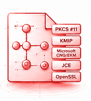
Native protocol support

Native protocol support: PKCS #11, KMIP, Microsoft CNG/EKM, JCE, and OpenSSL provider interfaces for enterprise application integration
Crypto-agile by design

Crypto-agile by design: update cryptographic algorithm policies and key schedules at the platform level, not application by application

PCI DSS 4.0, HIPAA, NIST SP 800-57, and ISO 27001 aligned, with full key lifecycle audit logging

PCI DSS 4.0, HIPAA, NIST SP 800-57, and ISO 27001 aligned, with full cryptographic key lifecycle audit logging

Available as on-premises hardware appliance, virtual appliance, or CryptoHub Cloud

Available as on-premises hardware appliance, virtual appliance, or CryptoHub Cloud (SaaS)
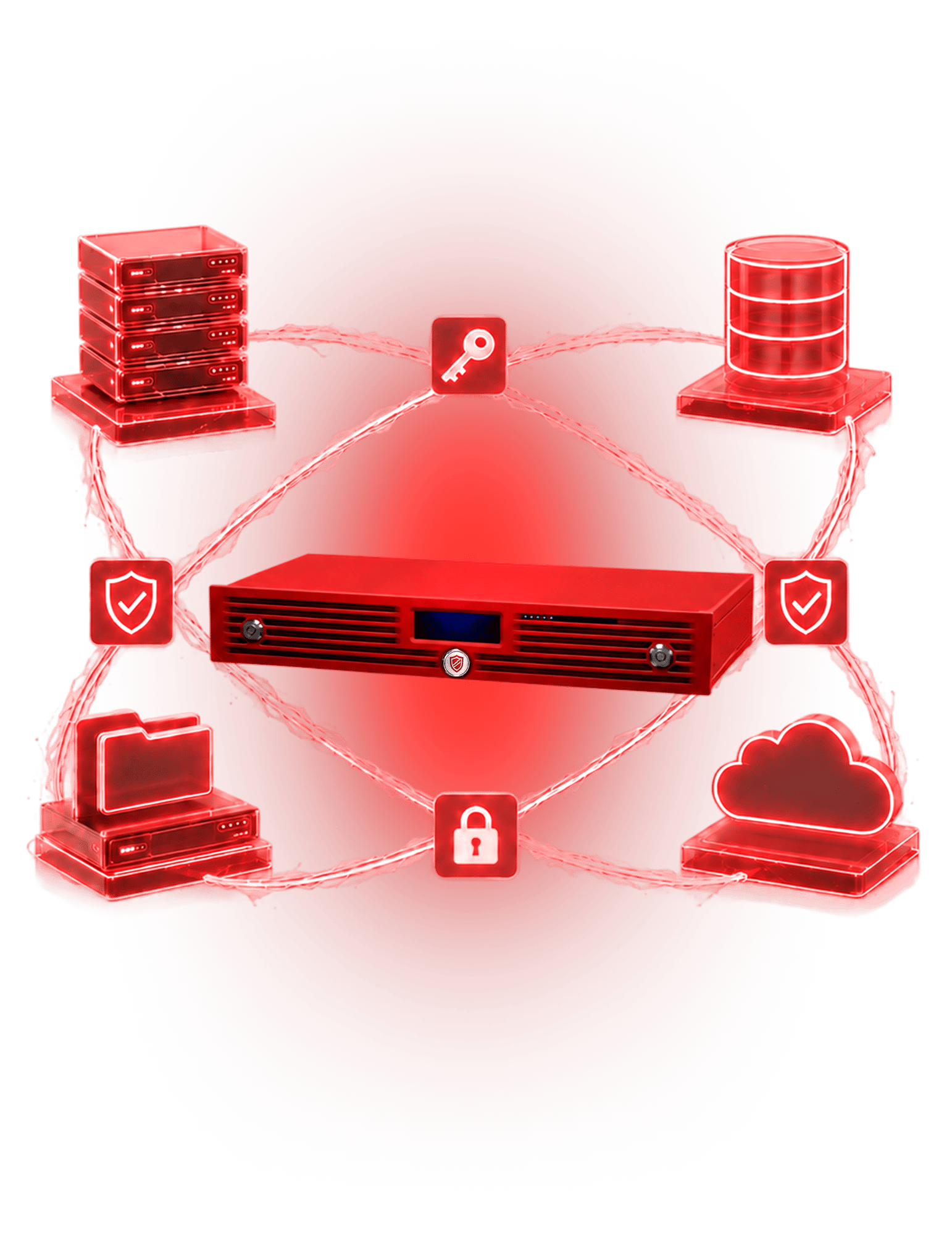
Why do security teams consolidate on CryptoHub? 

Most enterprise data protection architectures grow by addition: one tool for key management, another for tokenization, a third for file encryption, a separate module for database TDE. Each product comes with its own admin console, access control model, audit log format, and upgrade cycle. The architecture works, until it doesn't. Security teams end up managing tooling complexity instead of governing data.

CryptoHub is built differently as a unified cryptographic management platform. Key management, tokenization, transparent file encryption, database TDE, and application-layer cryptographic services all run through one control plane. One access control model. One audit log. One place to rotate keys, update algorithm assignments, revoke access, and review who touched what.

That consolidation matters most when data protection spans mixed environments: on-premises databases, Windows file servers, cloud workloads, payment systems, and custom applications. CryptoHub provides consistent cryptographic key governance across all of them, without requiring a separate product for each.

Which CryptoHub capability fits your workload?

This is the routing layer for enterprise data protection workloads. Choose the capability that matches your workload and go deep.

Workload What CryptoHub does Explore
Databases: SQL Server, Oracle, MySQL, MongoDB External key management via EKM, PKCS #11, and KMIP; HSM-backed protection of database master keys Database TDE →
Files and directories: Windows servers and endpoints Transparent file and directory encryption via the TDP agent; centrally governed policy, no application changes required Transparent Data Protection →
Payment and sensitive fields: PANs, account numbers, patient identifiers, employee IDs, and other sensitive fields Format-preserving and non-format-preserving tokenization; tokens replace original values in downstream systems Tokenization →
Custom applications: internal or third-party apps Cryptographic services via PKCS #11, KMIP, CNG, and JCE; integration engineering available for proprietary interfaces Application Encryption →
Key lifecycle management: cross-environment, multi-system Centralized generation, rotation, distribution, revocation, and audit for all keys across the enterprise Enterprise Key Management →

What Does Single Control Plane Mean?

Buyers hear "single platform" often enough that it stops registering. Here is what it means in practice.

When a key rotation schedule changes, you change it once in CryptoHub. Every connected enterprise system, databases, file servers, applications, cloud services, including databases, file servers, applications, and into five different consoles, coordinate five different upgrade cycles, or reconcile five different audit log formats.

When an auditor asks for evidence of dual-control on sensitive key operations, CryptoHub surfaces it from one system. When a separation-of-duties requirement needs enforcing, role-based access control covers every workload, not just the ones that happened to get their own admin console.

When algorithm requirements change, and they are changing, with NIST's post-quantum migration timeline now active, CryptoHub's centralized policy model means algorithm assignments and key schedules update at the platform level. Applications do not need to be rewritten or individually reconfigured. That is crypto-agility as a design property, not a retrofit.

V3 What Does Single control Plane mean_

How does HSM hardware anchor the architecture?

Every cryptographic operation in CryptoHub traces back to FIPS 140-3 Level 3 validated HSM hardware. Key generation happens inside the HSM. Master keys and key encryption keys are protected in dedicated cryptographic hardware, not in software key stores, cloud-hosted secrets managers, or application configuration files.

This is what separates hardware security module (HSM)-backed key management from software-only approaches. The HSM is tamper-resistant, independently validated, and the root of trust that gives downstream encryption its integrity. CryptoHub is built on that foundation across every workload it covers.


Does CryptoHub work with the infrastructure you already have?

Yes. CryptoHub integrates through the standard cryptographic interfaces that enterprise applications and databases already support.

Database integrations

  • SQL Server: Microsoft EKM via FXCL connector
  • MySQL Enterprise: KMIP / keyring_okv
  • Oracle Database: PKCS #11
  • MongoDB: KMIP
  • MariaDB and PostgreSQL: via Transparent Data Protection or column-level encryption
  • Additional database platforms and environments supported through integration engineering.

Application cryptographic interfaces

  • PKCS #11
  • Microsoft CNG (Cryptography API: Next Generation)
  • KMIP (Key Management Interoperability Protocol)
  • Java Cryptography Extension (JCE)
  • OpenSSL provider
  • Additional platforms and environments supported through integration engineering
  • For applications that do not natively support these interfaces, Futurex provides integration engineering to build custom connectors.

Deployment models

CryptoHub is available as an on-premises hardware appliance, a virtual appliance for private or hybrid cloud environments, or CryptoHub Cloud, a fully managed SaaS deployment. Organizations with strict data residency requirements run on-premises hardware. Teams that need rapid deployment without infrastructure management overhead use CryptoHub Cloud. Hybrid configurations are supported when workloads are distributed across both.

cryptohub appliance_icon

Appliance

CryptoHub deployed on dedicated Futurex hardware within your data center. HSM-backed key protection and policy enforcement remain under your direct control, making this deployment ideal for organizations with strict data residency, regulatory, or air-gapped security requirements.

cryptohub virtual appliance_icon

Virtual Appliance

CryptoHub deployed as a virtual appliance in private cloud or virtualized infrastructure. Delivers centralized key management and consistent cryptographic policy across VMware, KVM, and hybrid environments while integrating with existing enterprise infrastructure.

cryptohub cloud_icon

CryptoHub Cloud

Futurex-managed CryptoHub delivered as a cloud service with HSM-backed key protection. Eliminate the operational burden of managing cryptographic infrastructure while maintaining hardware-backed key security, centralized governance, and enterprise-scale availability for cloud and hybrid workloads.
How does CryptoHub support compliance programs?

FIPS 140-3 Level 3 validated HSMs satisfy hardware key protection requirements under PCI DSS 4.0, NIST SP 800-57, HIPAA Security Rule, and related frameworks. Dual-control and split knowledge procedures for sensitive key operations are supported at the platform level. Every cryptographic key lifecycle event, generation, distribution, rotation, revocation, and expiration, is logged with the specificity that compliance audits require.

PCI DSS: CryptoHub supports external key management for cardholder data environments and tokenization as a scope reduction strategy. Tokenization is most commonly applied to payment card data, PANs, track data, and sensitive cardholder fields, but the same capability applies to account numbers, patient identifiers, employee IDs, and any other sensitive field where replacing the original value reduces exposure. Replacing stored values with tokens removes those systems from direct PCI scope in many architectures.

HIPAA: CryptoHub provides database encryption and application-layer encryption for ePHI, with key lifecycle management and audit logging to support Security Rule requirements.

Post-quantum readiness: Centralized cryptographic algorithm policy management means migration timelines can be executed at the platform level. When NIST-approved post-quantum algorithms are required, CryptoHub is the control point - not dozens of individual application teams.

Frequently Asked Questions

What is the difference between encryption and tokenization?

 Encryption transforms data using a key, producing ciphertext that is decryptable with the correct key. Tokenization replaces the original value with a substitute that has no mathematical relationship to it - the original is stored securely and retrievable only through the tokenization service. Both reduce sensitive data exposure; the right choice depends on whether downstream systems need to process original values or can work with substitutes.  

Does CryptoHub replace existing database encryption?

No. CryptoHub integrates with existing database TDE by providing HSM-backed key management for the database master key via EKM, KMIP, or PKCS #11. You keep your existing database platform; you gain centralized key protection, lifecycle management, and audit logging.  

Transparent Data Protection vs. Database TDE

Transparent Data Protection encrypts at the file system layer - files and directories on Windows systems, without requiring application changes. Database TDE encrypts at the storage layer inside the database engine. TDP is the right tool for file and directory encryption workloads; database TDE manages data within a database engine. CryptoHub supports both.

Does CryptoHub work with cloud environments?

Yes. CryptoHub supports on-premises, private cloud, and hybrid deployment models, plus a fully managed CryptoHub Cloud option. For BYOK scenarios, keys are generated and protected in the Futurex HSM environment and delivered to authorized cloud services. Key material remains under your control independent of the cloud provider.

Integrating apps without native HSM support

CryptoHub supports PKCS #11, KMIP, Microsoft CNG, JCE, and OpenSSL provider interfaces, which most enterprise applications and cryptographic libraries already support. For applications without native interface support, Futurex provides integration engineering to build custom connectors.

How does CryptoHub support post-quantum readiness?

CryptoHub centralizes cryptographic algorithm policy and key management at the platform level. As NIST post-quantum cryptography standards finalize and migration timelines become active, CryptoHub is the control point for updating algorithm assignments and key schedules across connected systems, without requiring changes in individual applications.

Featured Resources

"...with the launch of CryptoHub. This innovative all-in-one hardware security module (HSM) and encryption key management solution promises to revolutionize data protection..."


- The World Financial Review

Ready To Consolidate Your Encryption Architecture?

Build Your HSM, Your Way.

CryptoHub covers key management, tokenization, transparent file encryption, database TDE, and application-layer cryptographic services through a unified enterprise data protection platform, backed by FIPS 140-3 Level 3 validated HSMs.

Available on-premises, as a virtual appliance, or as CryptoHub Cloud.


If you are evaluating how to bring multiple data protection workloads under centralized governance, the right next step is a platform architecture discussion. Start for Free.