Skip to content
Futurex Tops ABI Competitive Report as #1 Innovator!
  • There are no suggestions because the search field is empty.
Futurex Tops ABI Competitive Report as #1 Innovator!

IoT Key Injection

Provision device identities, digital certificates, and encryption keys during manufacturing through an HSM-backed process built for connected device production at scale.

IoT Key Injection with Futurex HSMs
939b4d2d130e3658af6b513407881d66_b84cc7c7-b994-4993-8aef-10df4e7326ae 3

HSM-backed device provisioning

e4818c306fbe4ea4a29f91a15a79e5fa_img 1-2

Production-line integration and batch processing

policy-driven injection with audit records
Policy-driven injection with audit records

Built for cloud, hybrid, and edge deployments

Built for cloud, hybrid, and edge deployments

What Is IoT Key Injection?

IoT key injection gives security and manufacturing teams a controlled way to provision cryptographic identities into connected devices during production.

Teams can use it to:

  • generate keys within HSM-backed trusted hardware
  • provision unique device identities using asymmetric keys and certificates
  • inject keys and credentials into devices during manufacturing workflows
  • validate provisioning results during quality assurance checks
  • document provisioning activity for audit and compliance review

This anchors device identity creation in a controlled manufacturing process, eliminating the need for separate, manual provisioning steps after deployment.


Why Futurex for IoT Key Injection?

IoT provisioning often spans manufacturing systems, certificate authorities, cloud platforms, and manual process steps. This fragmentation creates weak traceability, inconsistent device identity controls, and security gaps at the point of manufacture.

Futurex centralizes IoT key injection in CryptoHub, a unified cryptographic platform built on HSM-backed architecture. It allows organizations to generate protected key material, operate a centralized or integrated certificate authority, and enforce policy-driven provisioning workflows across distributed manufacturing environments.

Unlike approaches that separate PKI, key generation, and provisioning workflows across multiple systems, Futurex enables:

check

Automated certificate issuance and signing during manufacturing 

check

High-availability HSM-backed infrastructure for continuous production-line operation

check

Support for unique device identities, including per-device or per-customer certificate models

check
Centralized policy enforcement across manufacturing locations and device types
check

Full audit visibility from key generation through device provisioning

IoT Key Injection Workflow

Futurex organizes IoT key injection around the manufacturing process. Security teams can apply policy, validate provisioning, and document device identity events from key creation through production release.

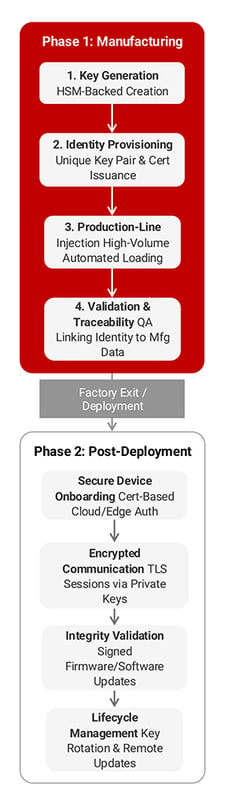
Phase 1: Manufacturing Trust Establishment

key shield


Key Generation and Protection

Device keys are generated inside HSM-backed systems, ensuring they are created and protected within tamper-resistant boundaries.

id badge check


Device Identity Provisioning (PKI Foundation) and Protection

Each device is provisioned with a unique asymmetric key pair and a digital certificate issued by a trusted certificate authority. This establishes the device’s identity within a PKI system, allowing it to authenticate and participate in trusted communications once deployed.

production line


Production-Line Injection

Keys and certificates are injected directly into devices during manufacturing through integrated production-line workflows, supporting high-volume and automated provisioning.

checklist


Validation and Manufacturing Traceability

Provisioned devices are validated during quality assurance processes, with records linking device identity, provisioning events, and manufacturing data.

Phase 2: Post-Deployment Trust and Operations

Once deployed, the PKI established during manufacturing enables:

lock in hand


Secure Device Onboarding

Futurex supports secure device identity and certificate-based onboarding, helping IoT devices establish trusted communication with cloud and edge platforms without exposing shared secrets.  

mobile device cloud lock


Encrypted Device-to-Cloud Communication

Devices establish TLS sessions using their private keys, ensuring encrypted and authenticated communication with backend systems.

checklist


Firmware and Software Integrity Validation

Firmware updates are signed and verified using trusted keys, ensuring only authorized code runs on the device.

key rotation


Controlled Key Rotation and Updates

Keys and certificates can be rotated or updated over time without replacing devices, supporting long-term lifecycle management.

Challenges in Managing IoT Key Injection at Enterprise Scale

Organizations frequently encounter challenges such as:

  • device identity workflows split across manufacturing and security teams
  • manual validation steps during high-volume production operations
  • inconsistent controls across production lines, device types, and manufacturing locations
  • limited traceability across supply chain handoffs and contract manufacturers
  • audit records scattered across provisioning tools and management systems
  • devices deployed into cloud, hybrid, and edge environments requiring long-term cryptographic support

These challenges grow when provisioning depends on separate device tools, certificate processes, cloud services, and manual coordination. Futurex consolidates those activities into a unified HSM-backed platform with centralized policy enforcement and comprehensive management capabilities.

iotKeyInjectionChallenges

IoT Key Injection Use Cases

IoT key injection supports device security workflows that span manufacturing, onboarding, cloud trust establishment, software integrity, and controlled field operations.

For example, a connected industrial sensor deployed in the field can use its provisioned certificate to authenticate to AWS IoT Core and establish a mutually authenticated TLS session. This helps ensure the device is trusted before transmitting operational data and helps prevent unauthorized devices from connecting to the platform.

Key use cases span provisioning, trust, update integrity, and controlled device operations, such as:

factory provisioning of unique device identities

Factory Provisioning of Unique Device Identities

Manufacturers establish trust during production by provisioning each device with a unique cryptographic identity using PKI-based workflows. CryptoHub supports key generation, certificate issuance, and injection within HSM-backed infrastructure, binding each device to a verifiable root of trust before it leaves the production line. In automotive and other embedded environments, this enables control modules, smart keys, and similar devices to authenticate to vehicle or backend systems using their provisioned identity. The result is a controlled, auditable provisioning workflow that eliminates ad hoc post-production identity setup.

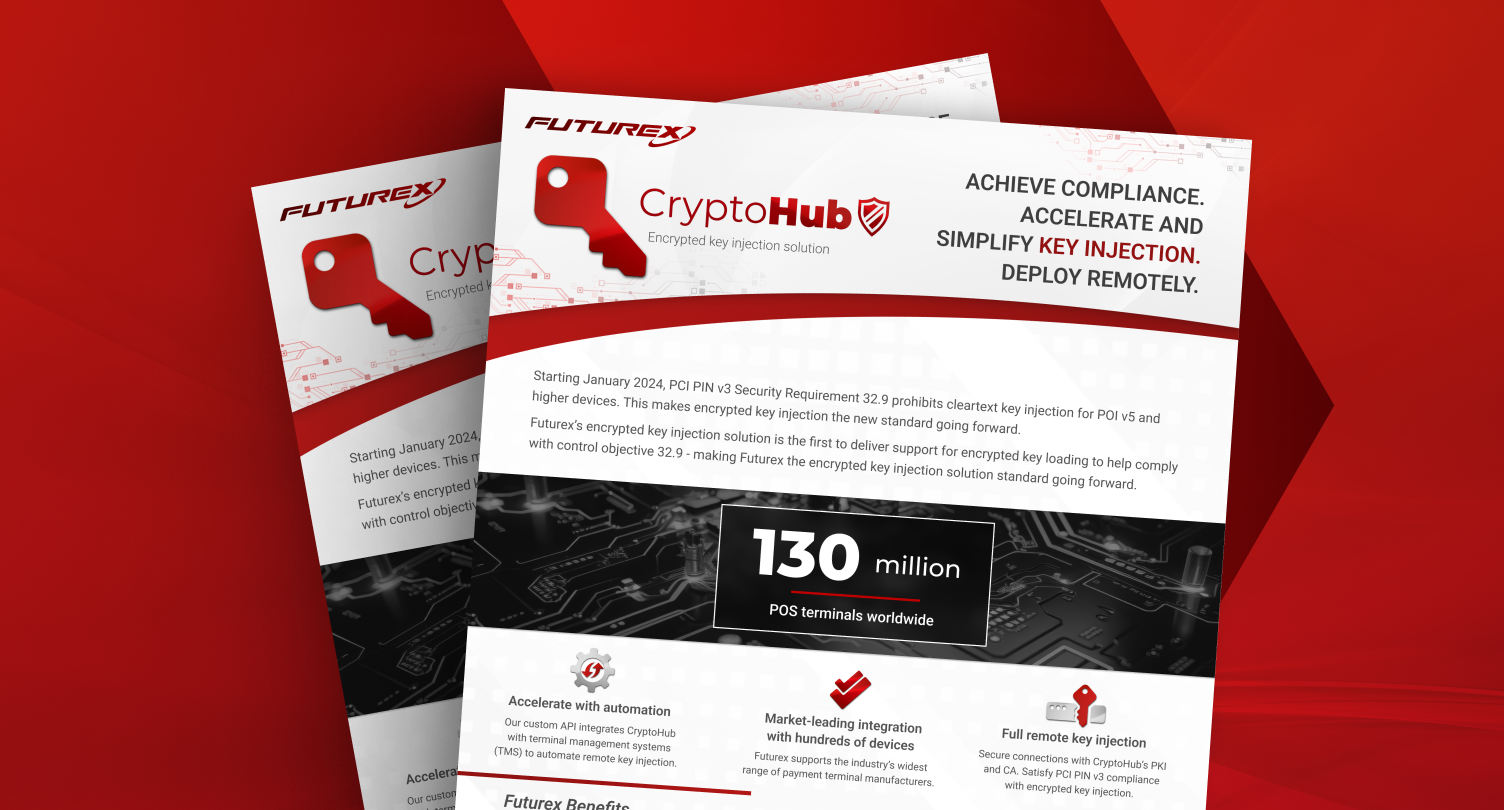
Futurex Case Study: Enterprise CA for Device Manufacturing & IoT - Case Study.pdf

code and license signing

Code and License Signing

IoT key injection can also support code and license signing by provisioning trusted signing keys within HSM-backed infrastructure. Those keys can be used to sign firmware, software updates, and digital licenses under controlled authority. For example, an automotive manufacturer can sign update packages or feature unlocks so that only authorized software and entitlements are accepted by the target devices. This ties software integrity and licensing to a controlled cryptographic trust model rather than leaving signing keys exposed in software.

certificate-based onboarding and secure enrollment

Certificate-Based Onboarding and Secure Enrollment

IoT key injection enables certificate-based onboarding by provisioning device credentials before deployment. Devices can leave manufacturing with an injected private key and certificate issued by a trusted CA, allowing them to authenticate to cloud platforms or management systems on first use. For example, a device can present its certificate during initial connection, enabling the platform to verify identity and enroll it into the correct tenant or environment. This creates a direct trust path from manufacturing to deployment and reduces onboarding friction.

tls pki credentials for device-to-cloud trust

TLS/PKI Credentials for Device-to-Cloud Trust

IoT key injection provisions the credentials needed for authenticated and encrypted device communication over TLS. Devices use injected private keys and certificates to establish mutually authenticated TLS sessions with cloud services, edge gateways, or backend systems. This allows both sides to verify identity before exchanging data and helps protect traffic from interception or tampering. By provisioning these credentials during manufacturing, organizations can enforce secure communication from the first connection.

firmware and signing keys for update integrety

Firmware and Signing Keys for Update Integrity

IoT key injection supports trusted firmware update workflows by provisioning the trust anchors used for signature verification. During manufacturing, devices can be loaded with trusted public keys or certificate chains used to validate signed firmware updates. Update packages are signed by authorized systems, and devices verify those signatures before applying the update. This helps ensure that only authenticated firmware is installed, even if the delivery path is compromised.

high-volume manufacturing or batch key injection

High-Volume Manufacturing or Batch Key Injection

IoT key injection supports high-volume manufacturing by integrating cryptographic provisioning into production-line workflows. CryptoHub automates key generation, certificate issuance, and injection so devices are provisioned in-line without slowing production throughput. This ensures each device receives a unique identity and validated credentials at scale while maintaining consistency across lines, facilities, and contract manufacturers. Provisioning becomes part of the manufacturing process, with traceability linked to each device record.

regulated or high-risk devices where key exposure is unacceptable

Regulated or High-Risk Devices Where Key Exposure Is Unacceptable

IoT key injection is critical in environments where key exposure creates security, safety, or compliance risk. In these cases, keys should be generated, handled, and injected within controlled, hardware-backed environments. CryptoHub supports workflows where key material is created inside HSMs and moved through controlled injection processes with enforced access controls and auditability. This is especially relevant in automotive, healthcare, and industrial environments where compromised device identity or software integrity can have serious consequences.


factory provisioning of unique device identities

Factory Provisioning of Unique Device Identities

Manufacturers establish trust during production by provisioning each device with a unique cryptographic identity using PKI-based workflows. CryptoHub supports key generation, certificate issuance, and injection within HSM-backed infrastructure, binding each device to a verifiable root of trust before it leaves the production line. In automotive and other embedded environments, this enables control modules, smart keys, and similar devices to authenticate to vehicle or backend systems using their provisioned identity. The result is a controlled, auditable provisioning workflow that eliminates ad hoc post-production identity setup.

Futurex Case Study: Enterprise CA for Device Manufacturing & IoT - Case Study.pdf

code and license signing

Code and License Signing

IoT key injection can also support code and license signing by provisioning trusted signing keys within HSM-backed infrastructure. Those keys can be used to sign firmware, software updates, and digital licenses under controlled authority. For example, an automotive manufacturer can sign update packages or feature unlocks so that only authorized software and entitlements are accepted by the target devices. This ties software integrity and licensing to a controlled cryptographic trust model rather than leaving signing keys exposed in software.

certificate-based onboarding and secure enrollment

Certificate-Based Onboarding and Secure Enrollment

IoT key injection enables certificate-based onboarding by provisioning device credentials before deployment. Devices can leave manufacturing with an injected private key and certificate issued by a trusted CA, allowing them to authenticate to cloud platforms or management systems on first use. For example, a device can present its certificate during initial connection, enabling the platform to verify identity and enroll it into the correct tenant or environment. This creates a direct trust path from manufacturing to deployment and reduces onboarding friction.

tls pki credentials for device-to-cloud trust

TLS/PKI Credentials for Device-to-Cloud Trust

IoT key injection provisions the credentials needed for authenticated and encrypted device communication over TLS. Devices use injected private keys and certificates to establish mutually authenticated TLS sessions with cloud services, edge gateways, or backend systems. This allows both sides to verify identity before exchanging data and helps protect traffic from interception or tampering. By provisioning these credentials during manufacturing, organizations can enforce secure communication from the first connection.

firmware and signing keys for update integrety

Firmware and Signing Keys for Update Integrity

IoT key injection supports trusted firmware update workflows by provisioning the trust anchors used for signature verification. During manufacturing, devices can be loaded with trusted public keys or certificate chains used to validate signed firmware updates. Update packages are signed by authorized systems, and devices verify those signatures before applying the update. This helps ensure that only authenticated firmware is installed, even if the delivery path is compromised.

high-volume manufacturing or batch key injection

High-Volume Manufacturing or Batch Key Injection

IoT key injection supports high-volume manufacturing by integrating cryptographic provisioning into production-line workflows. CryptoHub automates key generation, certificate issuance, and injection so devices are provisioned in-line without slowing production throughput. This ensures each device receives a unique identity and validated credentials at scale while maintaining consistency across lines, facilities, and contract manufacturers. Provisioning becomes part of the manufacturing process, with traceability linked to each device record.

regulated or high-risk devices where key exposure is unacceptable

Regulated or High-Risk Devices Where Key Exposure Is Unacceptable

IoT key injection is critical in environments where key exposure creates security, safety, or compliance risk. In these cases, keys should be generated, handled, and injected within controlled, hardware-backed environments. CryptoHub supports workflows where key material is created inside HSMs and moved through controlled injection processes with enforced access controls and auditability. This is especially relevant in automotive, healthcare, and industrial environments where compromised device identity or software integrity can have serious consequences.

Crypto-Agility and IoT Key Injection

Connected devices often remain in service for years or decades, making crypto-agility a critical device program requirement, not just an infrastructure consideration.

Futurex provides teams with centralized control over device key policies and cryptographic operations as requirements evolve across manufacturing and deployed environments. This enables teams to plan for algorithm updates, post-quantum migration, and long-life device protection without rebuilding provisioning workflows or replacing deployed devices.

Hardware Root of Trust for IoT Key Injection

Device identities are only trustworthy if teams can verify how those identities were created and protected during manufacturing.

A hardware root of trust ensures IoT key injection operations remain anchored within tamper-resistant hardware security modules validated to FIPS 140-3 Level 3 standards.

In PKI-based IoT environments, the root of trust extends beyond the device to the systems that generate and sign device identities. The certificate authority (CA) and HSM infrastructure serve as the trust anchor for the entire device ecosystem, ensuring that every issued certificate can be traced back to a controlled, validated source.

Hardware-backed IoT key injection provides:

  • secure key generation within FIPS-validated hardware boundaries
  • protected key storage before injection into devices
  • tamper-resistant handling of provisioning operations
  • strong access control enforcement for sensitive device identity workflows
  • comprehensive audit trails for provisioning events and compliance review

This architecture ensures cryptographic material remains protected within validated hardware during provisioning, establishing a trusted foundation for device identity throughout the device lifecycle.

rootOfTrust

IoT Key Injection Capabilities

IoT key injection platforms should provide comprehensive capabilities for secure device provisioning at manufacturing scale.

Futurex IoT Key Injection includes:

policy-driven provisioning

Policy-Driven Provisioning

Centralized application of provisioning policies across device types, production lines, and manufacturing locations.

device identity and certificate provisioning

Device Identity and Certificate Provisioning

Assignment of unique asymmetric key pairs and digital certificates to each device for authentication and trust establishment.

high-volume batch processing

High-Volume Batch Processing

Support for high-volume device provisioning with automated workflows and batch processing capabilities for production-line efficiency.

validation and quality assurance

Validation and Quality Assurance

Validation of provisioning results during manufacturing quality checks to ensure provisioning consistency and device security integrity.

comprehensive audit trails and reporting

Comprehensive Audit Trails and Reporting

Documentation of provisioning events, validation results, device identities, and management activity for compliance review and operational analysis.

centralized device management

Centralized Device Management

CryptoHub-based orchestration for key injection workflows, including policy-driven provisioning, real-time monitoring, and audit-ready compliance reporting.

post-deployment device support

Post-Deployment Device Support

Extension of key management capabilities to deployed device environments across cloud, hybrid, and edge models for ongoing cryptographic operations.

Post-Deployment Device Support


Post-Deployment Device Support

Extension of key management capabilities to deployed device environments across cloud, hybrid, and edge models for ongoing cryptographic operations.

IoT Key Injection Architecture

IoT Key Injection integrates with enterprise cryptographic infrastructure as a manufacturing-stage control layer for device identity provisioning and protected key management.

A typical architecture includes:

  • CryptoHub as the orchestration platform for provisioning control, policy enforcement, and workflow automation
  • Hardware Security Modules (HSMs) providing the root of trust for secure key generation and protected cryptographic operations
  • integrated or external certificate authority (CA) services for issuing device certificates within a PKI framework
  • production-line systems (MES) for automated injection of keys and certificates into devices during manufacturing
  • policy and access control layers enforcing provisioning rules, approval workflows, and separation of duties
  • validation and traceability systems linking device identity to manufacturing and QA records
  • cloud and device platforms consuming device identities for authentication, communication, and lifecycle operations

This architecture enables teams to maintain centralized control over device provisioning without fragmenting device identity operations across separate tools and manual processes.

IoT-Key-Injection-Workflow

Integrations

IoT Key Injection integrates with the systems that manufacture, provision, manage, and connect deployed devices.


Manufacturing and Device Operations

  • production-line provisioning workflows and manufacturing execution systems (MES)
  • quality assurance validation processes
  • batch manufacturing environments and high-volume production lines
  • distributed manufacturing operations across contract manufacturers and global facilities


Cloud and Hybrid Environments

  • AWS IoT Core and AWS Key Management Service
  • Microsoft Azure IoT Hub and Azure Key Vault
  • Google Cloud IoT and Google Cloud Platform
  • hybrid and edge deployment models for distributed device infrastructure


Device Identity and Certificate Workflows

  • digital certificate provisioning and PKI integration
  • public key infrastructure for device authentication and trust establishment
  • certificate lifecycle management for deployed devices
  • role-based controls and access policies for device operations

These integrations enable organizations to provision device identities consistently across manufacturing operations and support devices throughout their deployment lifecycle.

CryptoHub Integration

IoT key injection is often fragmented across production-line systems, certificate workflows, device onboarding tools, and manual provisioning steps, creating inconsistent device identity control, weak manufacturing traceability, and audit records spread across separate environments.

Futurex CryptoHub centralizes IoT key injection in a unified, HSM-backed platform, enabling organizations to generate protected key material, provision unique device identities, inject encryption keys, validate production events, and document device security activity within secure cryptographic boundaries. It supports policy-driven provisioning, batch injection, digital certificate workflows, remote key updates, and synchronized key management across manufacturing, cloud, hybrid, edge, and multi-site device environments.

While others depend on disconnected provisioning tools and manual coordination across manufacturing, certificate, and device management teams, Futurex CryptoHub delivers centralized IoT provisioning control with HSM-backed key protection, consistent policy enforcement, lower operational complexity, and unified audit visibility across connected device programs.

Sunray_Orange (1)

Compliance Support

IoT Key Injection helps teams maintain auditability, traceability, and control over device provisioning records and related security operations.

Futurex supports:

  • comprehensive documentation of provisioning activity for audit review and compliance assessments
  • detailed reporting for policy actions, validation events, and device identity management activity
  • manufacturing traceability records for supply chain security and contract manufacturer oversight
  • hardware-backed protection through FIPS 140-3 Level 3 validated HSMs
  • compliance support for IEC 62443 (industrial automation security), ISO 27001 controls, NIST Cybersecurity Framework, ISO 26262 (automotive functional safety), FCC wireless device requirements, and PCI DSS where device programs require those standards

For regulated device programs, this provides comprehensive records of what was provisioned, when provisioning occurred, where devices were manufactured, which policies were applied, and how cryptographic controls were enforced throughout the manufacturing process.

IoT Key Injection FAQ

What is IoT key injection?

IoT key injection is the process of provisioning device identities, digital certificates, and encryption keys into connected devices during manufacturing.

How does Futurex support device identity provisioning?

Futurex uses CryptoHub and HSM-backed key generation to provision unique asymmetric key pairs, digital certificates, and device credentials during manufacturing operations. Keys are generated within FIPS 140-3 Level 3-validated hardware and injected into devices during production-line integration.

How is IoT key injection different from key distribution?

Key distribution focuses on delivering keys to authorized systems and applications. IoT key injection focuses on provisioning identities and keys directly into devices during manufacturing.

How does IoT key injection integrate with cloud and edge environments?

Futurex supports deployed device environments across AWS, Microsoft Azure, Google Cloud, hybrid infrastructure, and edge processing models.

Why does hardware-backed provisioning matter for IoT devices?

 Hardware-backed provisioning keeps cryptographic material inside tamper-resistant HSM boundaries during key generation and handling, reducing exposure during manufacturing. 

How does IoT key injection support compliance efforts?

Futurex provides reporting, audit documentation, validation records, and controlled provisioning workflows that help teams document device security operations for review.

Featured Resources

"10,000+ devices signed per batch, 5-9's availability, live-production, 3-month deployment supporting a multi-national, three continent scope. Solution supports hundreds of millions of manufactured IoT devices per year."


- Case Study "Enterprise CA, IoT for High Volume Manufacturing"

Strengthen Connected Device Provisioning at Manufacturing Scale

Manual device provisioning creates traceability gaps, inconsistent controls, and operational inefficiencies across production environments. Futurex IoT Key Injection provides the HSM-backed process and centralized management needed to provision device identities and encryption keys with stronger control and comprehensive audit visibility.