Payment Key Management
Futurex's payment key management ensures secure key generation, distribution, and injection, adhering to PCI DSS and EMV standards.

Centralize encryption key lifecycle management across applications, cloud infrastructure, payment systems, and IoT environments.
Hardware-backed root of trust
Centralized lifecycle control across hybrid environments
Built for crypto-agility and PQC transition
Trusted by global enterprises
Enterprise key management refers to the centralized administration of cryptographic keys used to encrypt and protect sensitive data across an organization’s infrastructure.
A modern enterprise key management system enables security teams to:
Effective key management ensures that encryption remains secure, compliant, and operationally manageable across complex IT environments.
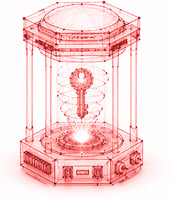
Futurex's payment key management ensures secure key generation, distribution, and injection, adhering to PCI DSS and EMV standards.
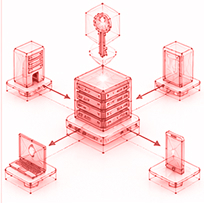
Futurex’s key distribution solutions ensure secure and automated delivery of cryptographic keys, enhancing security and efficiency for diverse applications.
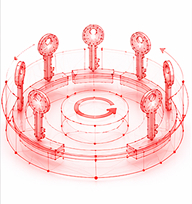
Futurex’s IoT key injection provides secure and scalable key provisioning for IoT devices, enhancing security throughout the device lifecycle.
Enterprise key management is often spread across vaults, HSMs, and application-specific tools, creating complexity and inconsistent control.
Futurex's CryptoHub unifies key management in a single, HSM-backed platform, allowing organizations to generate, protect, and manage keys within secure cryptographic boundaries. It supports crypto-agile infrastructure, isolated key domains, and automated lifecycle management across hybrid and multi-cloud environments.
While others rely on fragmented point solutions, Futurex delivers a simpler, more scalable approach built for control, flexibility, and evolution.
One of the primary functions of an enterprise key management solution is automating the full cryptographic lifecycle.
Futurex's payment key management ensures secure key generation, distribution, and injection, adhering to PCI DSS and EMV standards.
Futurex’s key distribution solutions ensure secure and automated delivery of cryptographic keys, enhancing security and efficiency for diverse applications.
Futurex’s IoT key injection provides secure and scalable key provisioning for IoT devices, enhancing security throughout the device lifecycle.
Secure creation of encryption keys within trusted hardware environments.
Controlled delivery of keys to applications, services, payment systems, and connected devices.
Protection of keys within hardware-backed secure environments such as HSMs.
Automated rotation policies that reduce risk exposure and maintain compliance.
Immediate deactivation of compromised or outdated keys.
Secure retention and destruction processes aligned with regulatory requirements.
Organizations frequently encounter challenges such as:
As encryption becomes more widely deployed, managing cryptographic infrastructure becomes increasingly complex.
Crypto-agility helps organizations adapt cryptographic algorithms, policies, and key management processes as requirements evolve. It supports more than routine rotation and migration.
It helps security teams prepare for post-quantum transition with stronger visibility into cryptographic dependencies, a clearer migration path, and less disruption across applications, infrastructure, and long-life data protection strategies.
As NIST standards mature and Harvest Now, Decrypt Later risk grows, centralized key management becomes a practical foundation for PQC readiness.
Gain visibility into cryptographic usage, algorithm dependencies, and key activity across sensitive applications and infrastructure. This provides teams with a clearer starting point for modernization, audit review, and migration planning.
Plan migration by risk, asset life cycle, regulatory pressure, and the systems most exposed to disruption. This helps teams sequence changes before critical applications, integrations, or compliance deadlines create pressure.
Support hybrid cryptographic models that help teams manage algorithm changes across existing systems in controlled stages. This provides teams with room to test, validate, and roll out new cryptographic controls through phased updates.
Reduce disruption during PQC production adoption by coordinating policy, application, and infrastructure changes. This helps teams align architecture decisions with standards updates before migration work reaches production systems.
Protect long-life data against Harvest Now, Decrypt Later risk by aligning key strategy with retention timelines. This provides teams with a practical path to protect data that must remain confidential for years.
Encryption keys must be protected with the same level of security as the data they safeguard.
A hardware root of trust ensures that cryptographic keys are generated, stored, and managed within tamper-resistant hardware security modules (HSMs).
Hardware-backed key management systems provide:
This architecture ensures that encryption keys remain protected even if other elements of the infrastructure are compromised.
Cryptographic key storage and management operations capabilities are secured within certified hardware security modules to prevent unauthorized access and key exposure.
Unified administration for key generation, distribution, rotation, archival, revocation, and destruction across hybrid, cloud, and on-premises environments.

Granular enforcement of cryptographic policies governing key access, usage permissions, expiration schedules, and operational separation of duties.
Automated scheduling and execution of cryptographic key rotation policies to reduce operational overhead and maintain security best practices.

Flexible integration with enterprise applications, cloud services, and security infrastructure through standards-based APIs and interoperability frameworks.
Protected key delivery mechanisms utilizing encrypted transport channels and authenticated provisioning workflows across distributed environments.

Detailed logging, monitoring, and reporting capabilities designed to support regulatory compliance, internal governance, and security investigations.


Organizations rely on centralized key management across a variety of environments
Automate generation, rotation, revocation, destruction, and auditing of encryption keys across cloud and hybrid deployments to simplify control and improve security.
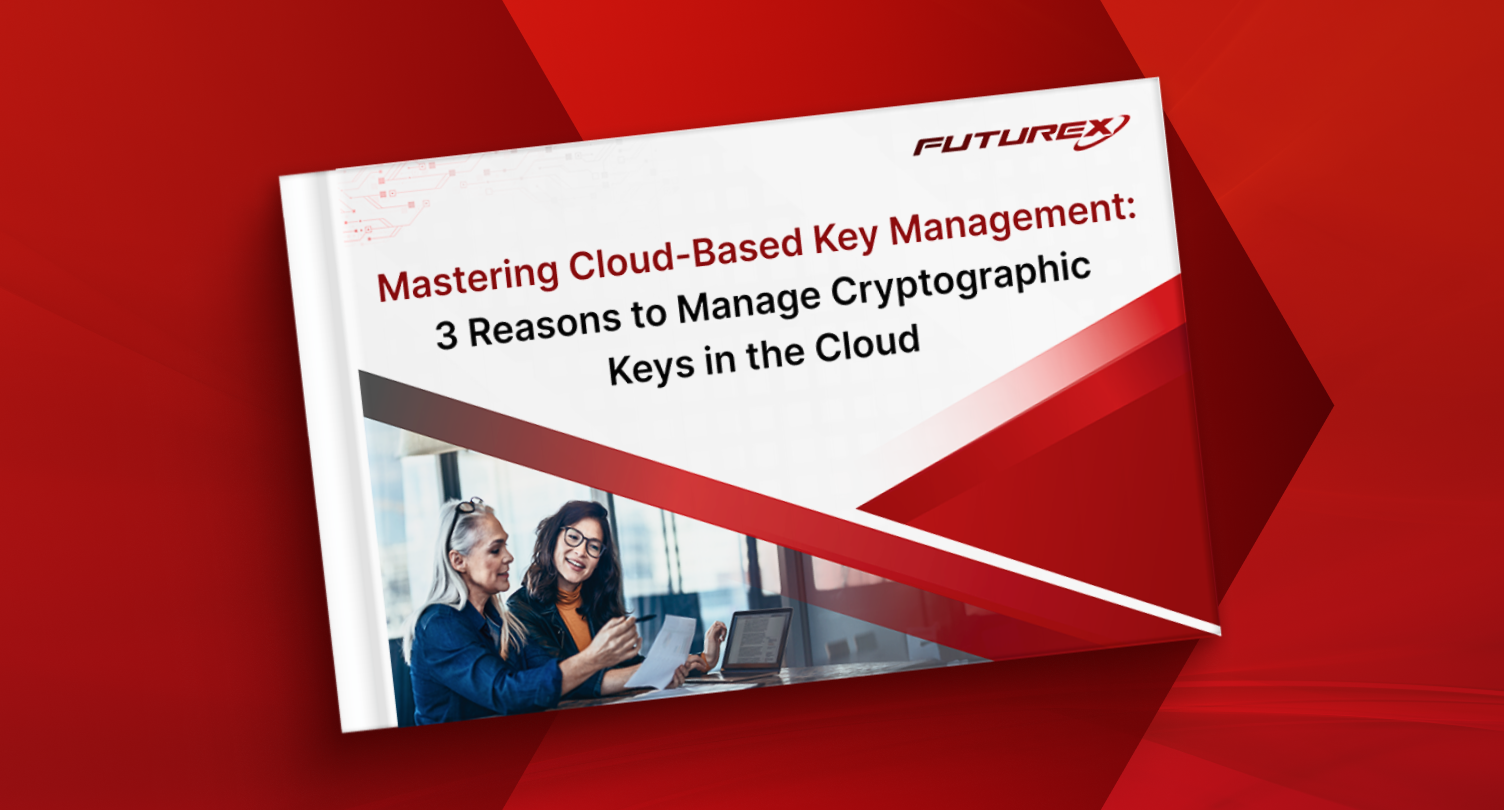
Centralize encryption key management across AWS, Microsoft Azure, Google Cloud, and hybrid multi-cloud environments to strengthen security and maintain consistent control.
Secure payment cryptography and protect cardholder data while maintaining PCI compliance.
Centralized ATM key injection with streamlined interoperability, remote management, and hardened cryptographic controls.
Scalable POS key injection with integrated HSM security and simplified device provisioning across payment environments.
Provision device identities and encryption keys securely during manufacturing.
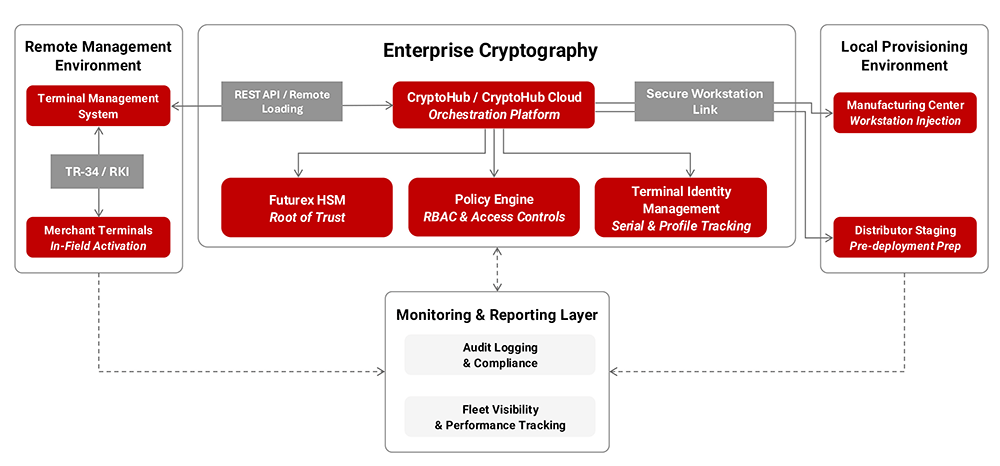
Enterprise key management platforms must integrate across diverse infrastructure environments.
Typical architecture includes:
An Enterprise Key Management architecture built with CryptoHub as the centralized orchestration platform provides the most intuitive, user-friendly management and compliance experience, while ensuring the highest level of enterprise security for your organization.
Futurex's payment key management ensures secure key generation, distribution, and injection, adhering to PCI DSS and EMV standards.
Futurex’s key distribution solutions ensure secure and automated delivery of cryptographic keys, enhancing security and efficiency for diverse applications.
Futurex’s IoT key injection provides secure and scalable key provisioning for IoT devices, enhancing security throughout the device lifecycle.
Organizations rely on centralized key management across a variety of environments.
Enterprise key management is often spread across vaults, HSMs, cloud services, certificate workflows, and application-specific tools, creating fragmented control, policy drift, and limited visibility across cryptographic operations.
Futurex CryptoHub unifies enterprise key management in a single, HSM-backed platform, allowing organizations to generate, protect, distribute, rotate, revoke, archive, and destroy keys within secure cryptographic boundaries. It supports crypto-agile infrastructure, isolated key domains, and automated lifecycle management across hybrid and multi-cloud environments, with standards-based integration through PKCS #11, KMIP, REST APIs, certificate workflows, and enterprise applications.
While others depend on disconnected point tools to manage keys across applications, cloud platforms, payment systems, and device environments, Futurex CryptoHub provides a simpler, more scalable control plane with HSM-backed protection, policy-driven automation, and unified audit visibility across enterprise cryptography.
.png?width=750&height=580&name=Sunray_Orange%20(1).png)
Enterprise key management is the centralized administration of encryption keys used to protect sensitive data across applications, infrastructure, and devices.
Centralized key management improves visibility, enforces security policies, and simplifies compliance with regulatory requirements.
HSMs provide tamper-resistant hardware environments for generating and protecting encryption keys.
Crypto agility allows organizations to update cryptographic algorithms and policies without disrupting operations.
Most systems support industry standards such as KMIP, PKCS#11, and REST APIs.
Centralized key lifecycle management and audit logging help organizations meet regulatory requirements.
"EPX’s parent company NAB would go on to acquire 12 subsidiary companies... seamlessly scale their HSMs’ processing power and range of functionality to meet growing business demands."
- EPX Case Study
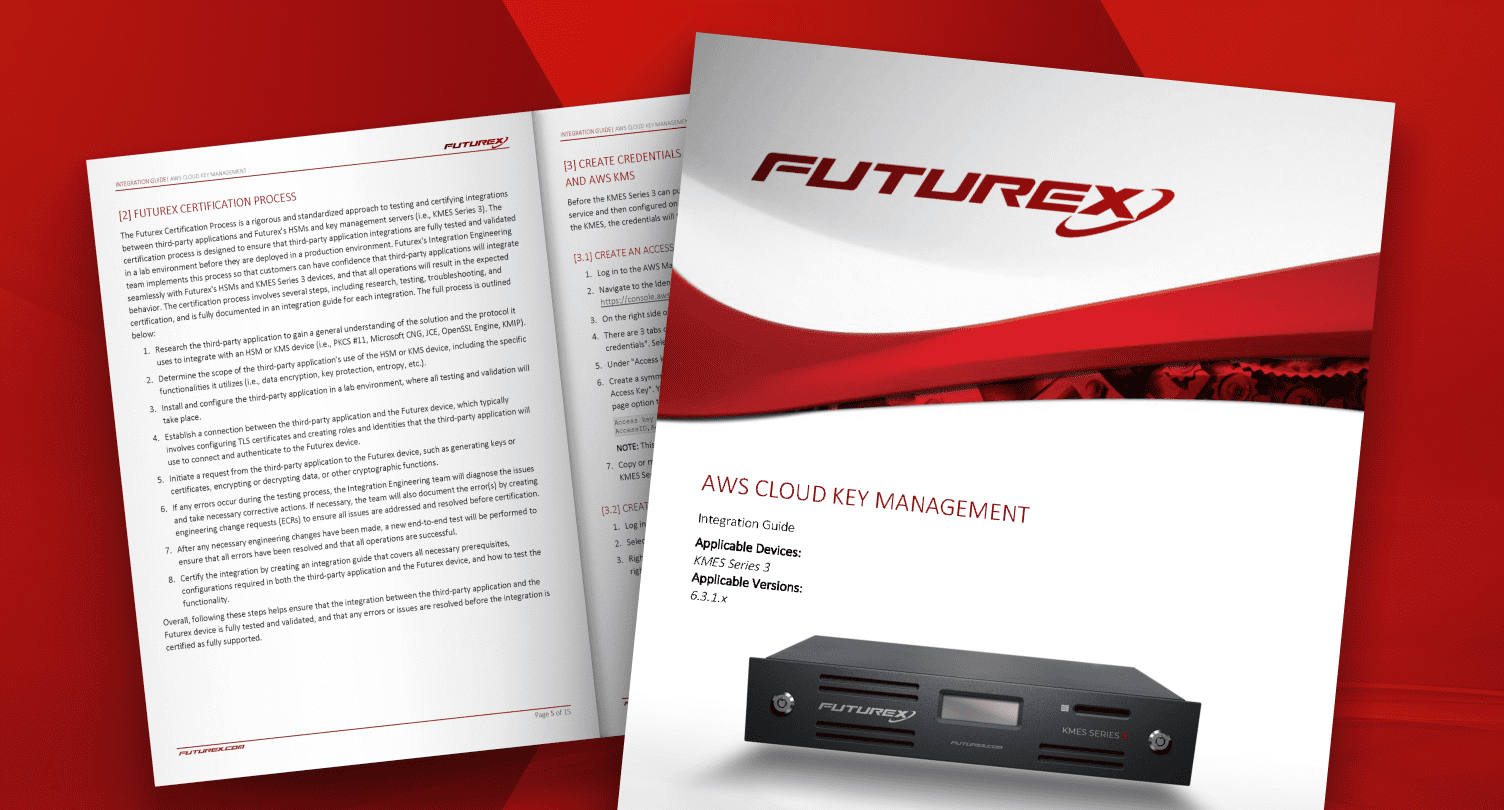
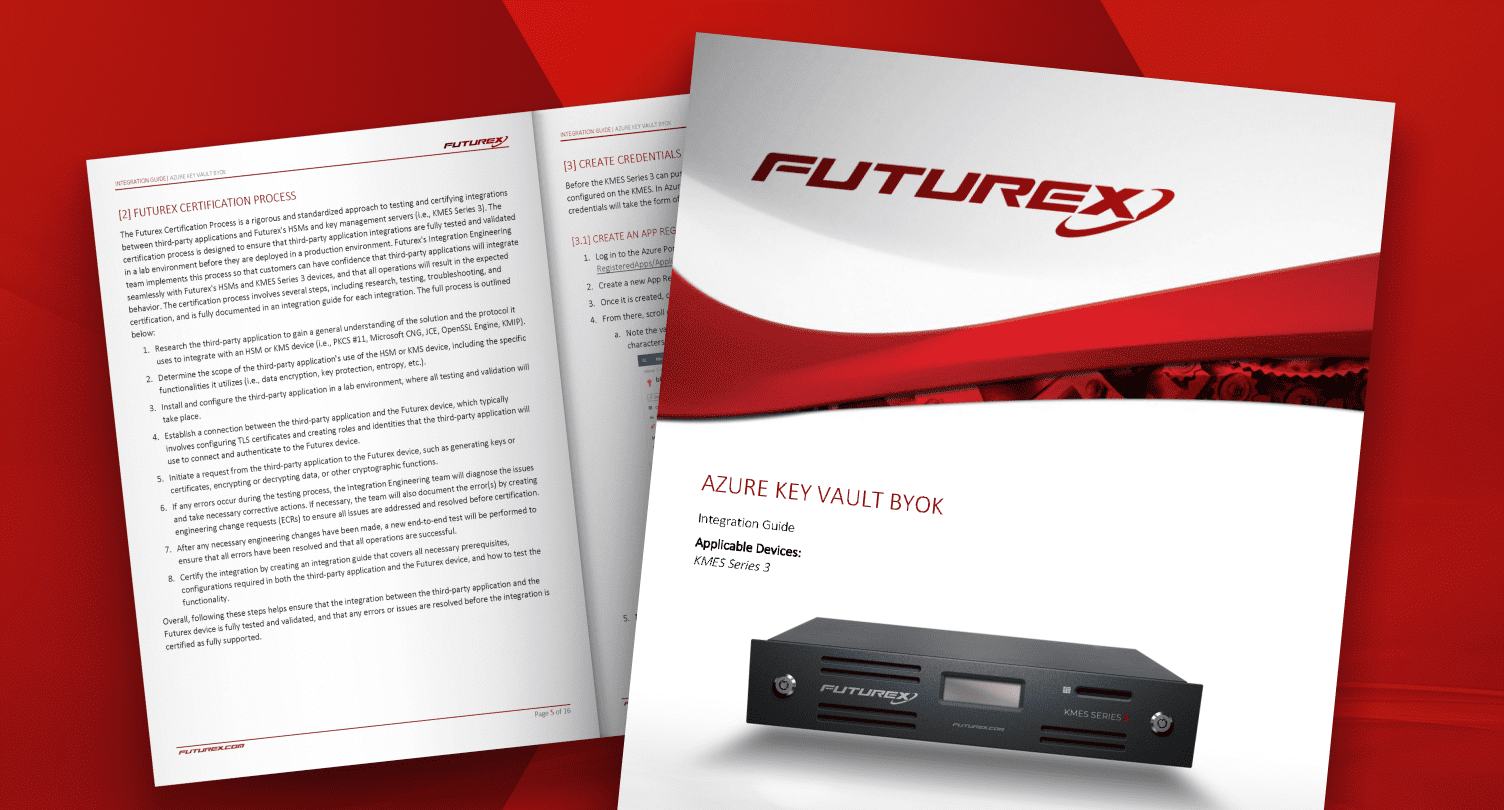
Futurex provides HSMs and key management servers that handle encryption, bring-your-own-key (BYOK). Futurex helps enterprise organizations deploy a modern cloud data security environment that complies with the latest standards and regulations.